Rav Meir Simchah HaKohen of Dvinsk zt"l
הרב מאיר שמחה בן שמשון קלונימוס קלמן הכהן זצ"ל
Elul 4 , 5686
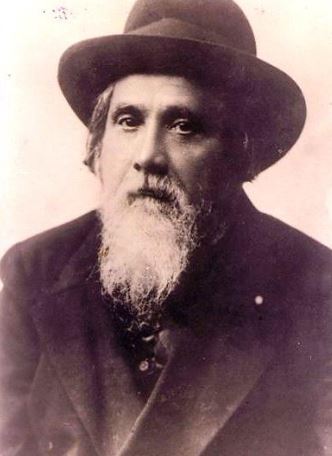

Rav Meir Simchah HaKohen of Dvinsk zt"l
Rav Meir Simcha HaKohen was born in 5605 in Baltermantz. As a youth he was already expert in nearly all of both Talmuds, Shas Bavli and Yerushalmi, as well as in works of Kabbalah. His rebbe, Rav Moshe Danishevsky, was Av Beis Din of Slovak. R’ Meir Simcha married at a young age the daughter of Rav Tzvi Paltiel of Bialystok. While living in Bialystok, he studied Torah day and night with the Av Beis Din, Rav Yom Tov Lipa, author of Shailos V’Teshuvos Oneg Yom Tov, as well as with the author of Shai Lamoreh on Maseches Bechoros.
He lived in sanctity and purity and became a leader of his generation, a great gaon to whom many turned from all over the world to resolve difficult Torah questions and uncertainties. In this merit, he came to be known by the honored title of ilui – genius of Dvinsk.
His magnum opus, the Ohr Sameach on Rambam, demonstrates Rav Meir Simcha’s sharp mind and great Torah expertise. He stood at the forefront of the battle against the misguided maskilim of Russia as well as the Zionists, movements in which he recognized the beginnings of the removal of the primacy of Torah and Yiras Shamayim from the Jewish worldview. He had no sons; his son-in-law, Rav Avraham Loftbar of Warsaw, was the author of Shailos V’Teshuvos Zera Avraham.
Rav Meir Simcha passed away on the Shabbos of Parshas Shoftim, the 4th of Elul, 5686 in Riga, Latvia; he was laid to rest in Dvinsk. May his holy merit protect us all.
Divrei Torah of Rav Meir Simchah HaKohen of Dvinsk zt"l

safeguard the character of shabbos
Safeguard the day of Shabbos to make it holy as Hashem your G-d commanded you. (Devarim 5:12)
The Ramban writes (Emor, Vayikra 23:24) that the shevusin – the specific forms of rest, and acts that we are to refrain from – are Torah-mandated laws. Without them, the entire day of Shabbos would be spent engaged in otherwise permitted forms of labor such as commercial transactions and arranging merchandise. However, the Torah left it to the Sages to enumerate and explain the details and specifics of these forbidden activities. (See further in Ramban’s commentary to the Torah.) The Ritva (Maseches Rosh Hashanah 32b) greatly praises this teaching.
The Ritva writes that the term shevus d’rabbanan – of the rabbis – does not imply that the concept of shevus (mandated refraining from non-malacha activities) does not exist at the Torah - commandment level. For if that was true, Shabbos would have the appearance of an ordinary weekday. Stores would be open, as would warehouses of grain and wine. People would carry objects back and forth from house to house through the carmelis domain; they would weigh, measure, and inventory things. How could it be that the Torah forbade us to transfer an object as small as a dried fig or date from a private domain to a pubic one while permitting all this great labor that would cause the Shabbos to cease being a day of rest?!
Rather, the explanation is that the Torah’s general prohibition of creative labor includes a positive commandment of shevus – rest, i.e. rest from labor. This is a general directive to ensure that Shabbos will not be transformed into an ordinary profane weekday. However, the delineation of the specific details needed to prevent Shabbos from becoming like an ordinary profane day is assigned to the rabbis and sages. … This is a gem that we have received from the Ramban.]
The purpose of Shabbos is to publicize the creation and renewed creation of the world by Hashem ex nihilo – out of nothing. It is testimony to the creation of the world. Another, individual-oriented reason for Shabbos observance is to allow us to set aside one weekly day of rest from labor and mundane work and turn our hearts towards the knowledge of Hashem and His ways and to study the Torah, so as not to become overly immersed in the ways of the physical world.
We find that the Talmud Yerushalmi (Maseches Shabbos 15:3) teaches that the days of Shabbos were given only for the purpose of our studying Torah on them. This source conforms with the second reason we cited. A second statement in the Yerushalmi, that Shabbos was given to us for eating and drinking, corresponds to the first reason of reminding us of Creation ex nihilo. It teaches us that compared to Creation itself, anything else is easy for Hashem; therefore we needn’t worry about our sustenance and livelihood. Eat and drink and Hashem will pay for it all, so don’t worry about tomorrow... If all the categories of mandated rest known as shevusin would be permitted, the entire day would be spent performing these permitted forms of labor and mundane work with great toil, and what time would there be for the study of Torah?!
The Torah thus alluded to this by stating “Shamor es yom HaShabbos l’kadsho – safeguard the day of Shabbos to make it holy.” Shamor refers to the fences and enactments enumerated by the Sages to safeguard and protect the mitzvos (Meshech Chochma, Eikev).
safeguard the character of shabbos
Safeguard the day of Shabbos to make it holy as Hashem your G-d commanded you. (Devarim 5:12)
The Ramban writes (Emor, Vayikra 23:24) that the shevusin – the specific forms of rest, and acts that we are to refrain from – are Torah-mandated laws. Without them, the entire day of Shabbos would be spent engaged in otherwise permitted forms of labor such as commercial transactions and arranging merchandise. However, the Torah left it to the Sages to enumerate and explain the details and specifics of these forbidden activities. (See further in Ramban’s commentary to the Torah.) The Ritva (Maseches Rosh Hashanah 32b) greatly praises this teaching.
The Ritva writes that the term shevus d’rabbanan – of the rabbis – does not imply that the concept of shevus (mandated refraining from non-malacha activities) does not exist at the Torah - commandment level. For if that was true, Shabbos would have the appearance of an ordinary weekday. Stores would be open, as would warehouses of grain and wine. People would carry objects back and forth from house to house through the carmelis domain; they would weigh, measure, and inventory things. How could it be that the Torah forbade us to transfer an object as small as a dried fig or date from a private domain to a pubic one while permitting all this great labor that would cause the Shabbos to cease being a day of rest?!
Rather, the explanation is that the Torah’s general prohibition of creative labor includes a positive commandment of shevus – rest, i.e. rest from labor. This is a general directive to ensure that Shabbos will not be transformed into an ordinary profane weekday. However, the delineation of the specific details needed to prevent Shabbos from becoming like an ordinary profane day is assigned to the rabbis and sages. … This is a gem that we have received from the Ramban.]
The purpose of Shabbos is to publicize the creation and renewed creation of the world by Hashem ex nihilo – out of nothing. It is testimony to the creation of the world. Another, individual-oriented reason for Shabbos observance is to allow us to set aside one weekly day of rest from labor and mundane work and turn our hearts towards the knowledge of Hashem and His ways and to study the Torah, so as not to become overly immersed in the ways of the physical world.
We find that the Talmud Yerushalmi (Maseches Shabbos 15:3) teaches that the days of Shabbos were given only for the purpose of our studying Torah on them. This source conforms with the second reason we cited. A second statement in the Yerushalmi, that Shabbos was given to us for eating and drinking, corresponds to the first reason of reminding us of Creation ex nihilo. It teaches us that compared to Creation itself, anything else is easy for Hashem; therefore we needn’t worry about our sustenance and livelihood. Eat and drink and Hashem will pay for it all, so don’t worry about tomorrow... If all the categories of mandated rest known as shevusin would be permitted, the entire day would be spent performing these permitted forms of labor and mundane work with great toil, and what time would there be for the study of Torah?!
The Torah thus alluded to this by stating “Shamor es yom HaShabbos l’kadsho – safeguard the day of Shabbos to make it holy.” Shamor refers to the fences and enactments enumerated by the Sages to safeguard and protect the mitzvos (Meshech Chochma, Eikev).
bitachon
Fear Hashem . . . attach and bind yourself to Him (Devarim 10:20).
Our teacher, the Rambam, explained that this mitzvah refers to attaching oneself to a Torah scholar. Alternatively, the Ramban explained that it refers to the attachment of special individuals to Hashem; that through their desire and passion for His Name and all His works and thoughts they become an abode for the Shechina-Divine Presence. However, it is not the way of a mitzvah to be commanded to those of lofty spiritual stature alone.
[See also Ohr Sameach on Rambam, Hilchos Talmud Torah 1:2 “All the mitzvos are commanded equally to both those of the lowest stature as well as (those of the loftiest and highest stature such as) Moshe Rabbeinu, since the pasuk says, ‘You shall all have one single Torah.’”]
Therefore in my opinion, 'Fear Hashem . . . attach and bind yourself to Him (Devarim 10:20)' is a mitzvah that is commanded to and includes all the people of our nation, each according to their own particular level and stature. ... This mitzvah refers to the commandment to have bitachon – to trust in Hashem …
There are several forms of trust. There is a type of trust that is musari – proper and just, such as that of a nation to their king, who concerns himself with providing for all of their needs. Then there is the natural inherent trust within relationships such as between husband and wife, where a wife trusts her husband to care for her needs. And then there is an even stronger form of trust, or bitachon, from a son to his father who is concerned for his welfare just as he is concerned over his own. All these forms trust are found in our relationship with Hashem, as the verse states “He is our King, He is our Father,” and therefore, “He shall save us,” (Yeshaya 33:22). . .
Hashem knows our needs and feels what we lack better than any human can, as it’s written (Yeshaya 63:9): In all of their pains and distress He is pained and distressed – bekol tzarasam lo tzar,…
All this is discussed at length by the Chasid (Rabbeinu Bachaya, author of Chovos HaLevavos) in the Gate of Bitachon. This is what our pasuk refers to as “Ubo sidbak – attach yourself to Him,” … the mitzvah of dveikus, which is a general inclusive commandment, with different levels required from each individual [according to their ability], but with no difference [as to every person’s obligation to fulfill it as appropriate to them]. . .
… The Chovos HaLevavos goes on to enumerate ten levels of trust (Section 7, end of the Gate of Bitachon) and the highest and loftiest of these is: To abhor this world and its delights and to flee to G-d in thought, soul and body. [One at this level] delights in calling to Him in solitude. In situations where he is in public with others, he wishes only to please and draw closer to G-d. His happiness in the love of G-d is so great that it overcomes him even more than worldly people love the world…
This is the level of dveikus referred to by the Ramban … “Ubo sidbak – attach yourself to Him,” which comes after the commandment to fear [only] Him, refers to trustful bitachon, for this is its truest definition, to fear no one else but Hashem. Thus, no man or enemy is feared, because we realize that there is no other cause than Hashem and we trust in Him alone. (Meshech Chochma Eikev)
emunas chachamim
Do not turn away from what they say to you right or left, (Devarim 17:11)
I see a need to explain the opinion of the Rambam in his ‘roots’ (i.e. Shorashim, Introduction to Sefer HaMitzvos) where he holds that whoever disobeys the Sages transgresses the prohibition of ‘lo sasur – do not turn away,’ each time he disobeys. The Ramban disagrees at length there … and although I am but dust and ashes beneath the feet of the Ramban, in my view, the truth follows the words of the Rambam and his opinion is the principal one.
The Torah wishes that in addition to the eternal laws that always exist there should also be an opportunity for innovation by adding temporary fences, warnings and stringencies as needed. Thus permission is granted to the sages to add laws via the rules that Torah tradition has passed down to them… Therefore, to ensure that no man can get up and declare, ‘I see the truth on my own so I need not be bound or subservient to the Sages of Israel’, the Torah gave us the commandment of ‘lo sasur.’
If this were not so, the Torah would be left to individuals [to do as they please] and they would break up into separate camps and groups and the knot that holds the nation together would become loosened and fall apart. This would contradict Hashem’s will that there be one unified nation that listens to its sages, therefore this mitzvah [lo sasur – do not turn away] is specifically to listen to what they tell us.
However, concerning the details of the specific matter that the Sages said or innovated, perhaps it is not agreed to or accepted by the will of the Creator . . . and even if their decision is true and does follow the will of the Creator, nonetheless Hashem did not desire to transform their rules and innovations into eternal law (for hidden reasons that the Divine G-dly wisdom alone understands). Rather, these rules and innovations should be considered sage advice and the will of the chachamim, and Hashem’s general desire is focused on the command that we listen to them, rather than on the specific details of their decrees …
This is how we explain the statement in the Talmud Yerushalmi (Maseches Sukkah 3:4) that on the first day of Sukkos [when the mitzvah is d’Oraisa – from the Torah itself] we recite the brachah “Al Netilas Lulav,” upon shaking the lulav, and the rest of the days [when the mitzvah is d’Rabbanan – from the sages] we recite “Al mitzvas zakeinim” [“According to commandments of the Elders”], because the mitzvah [of lo sasur – do not turn away] is to listen to them [rather than specifically to the details of the mitzvah they innovated, to shake lulav on the intermediary days of Chol Hamoed even outside the Beis Hamikdash] (Meshech Chochma, Shoftim).